Often checked in teens and young adults
Wisdom teeth commonly cause problems between about ages 15 and 25. They can still be evaluated or removed at other ages if they are painful, decayed, or difficult to clean.


Wisdom teeth are the third molars in the very back of the mouth. The main question is simple: is there enough room, and are they causing problems? GFID evaluates the position, symptoms, X-rays, comfort options, and timing before recommending removal.
Wisdom teeth commonly cause problems between about ages 15 and 25. They can still be evaluated or removed at other ages if they are painful, decayed, or difficult to clean.
Some patients need sedation for comfort and relaxation. If sedation is used, the patient needs someone to drive them to the office and home afterward.
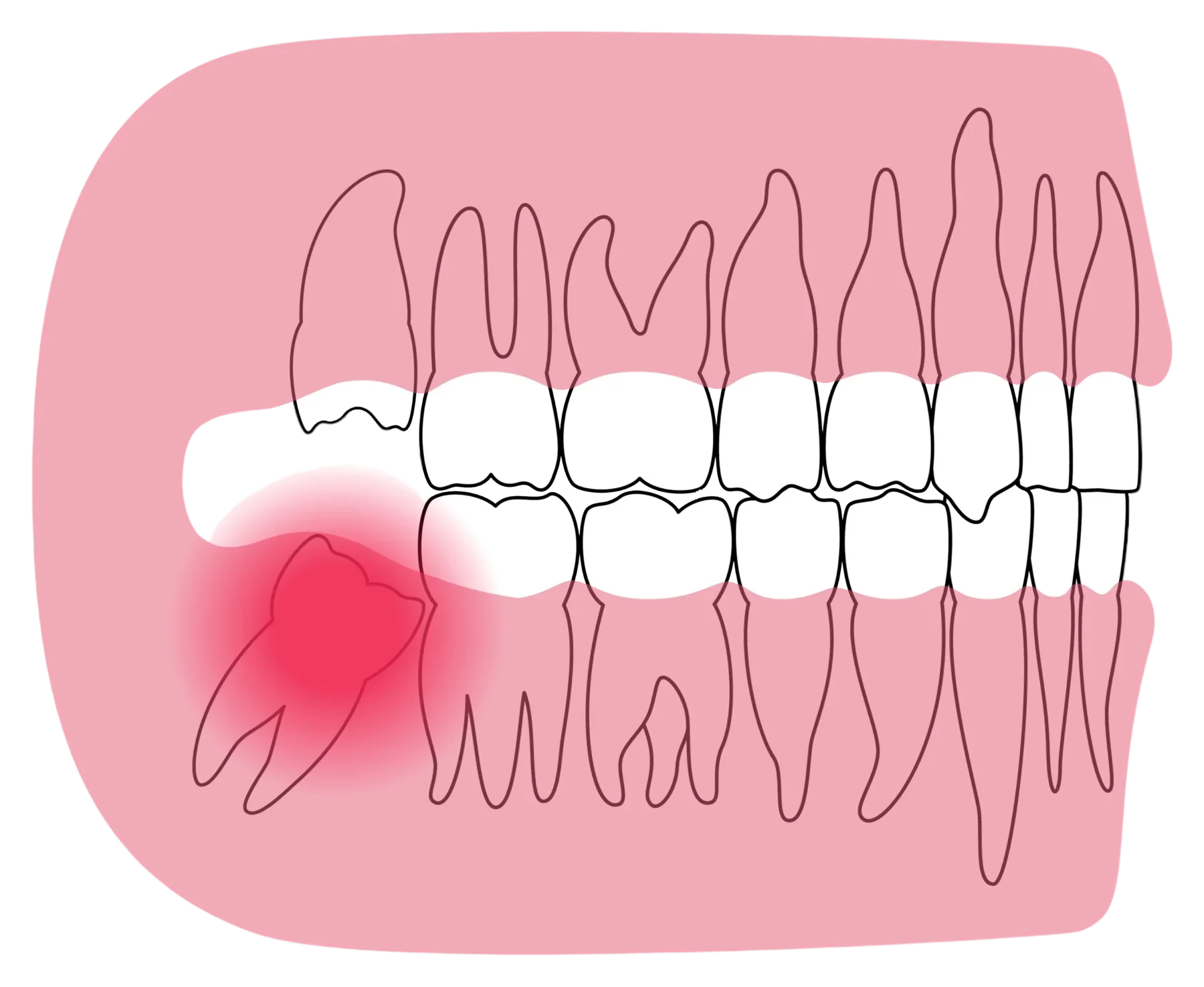
Some wisdom teeth come in straight, some are tilted, and some are impacted under gum tissue or bone. The evaluation helps the doctor explain the safest plan.
These simple diagrams help patients understand why the doctor may recommend watching, cleaning differently, or removing a wisdom tooth.
Impacted
A wisdom tooth can sit under gum tissue or bone. If it causes pain, swelling, infection, or pressure, removal may be recommended.
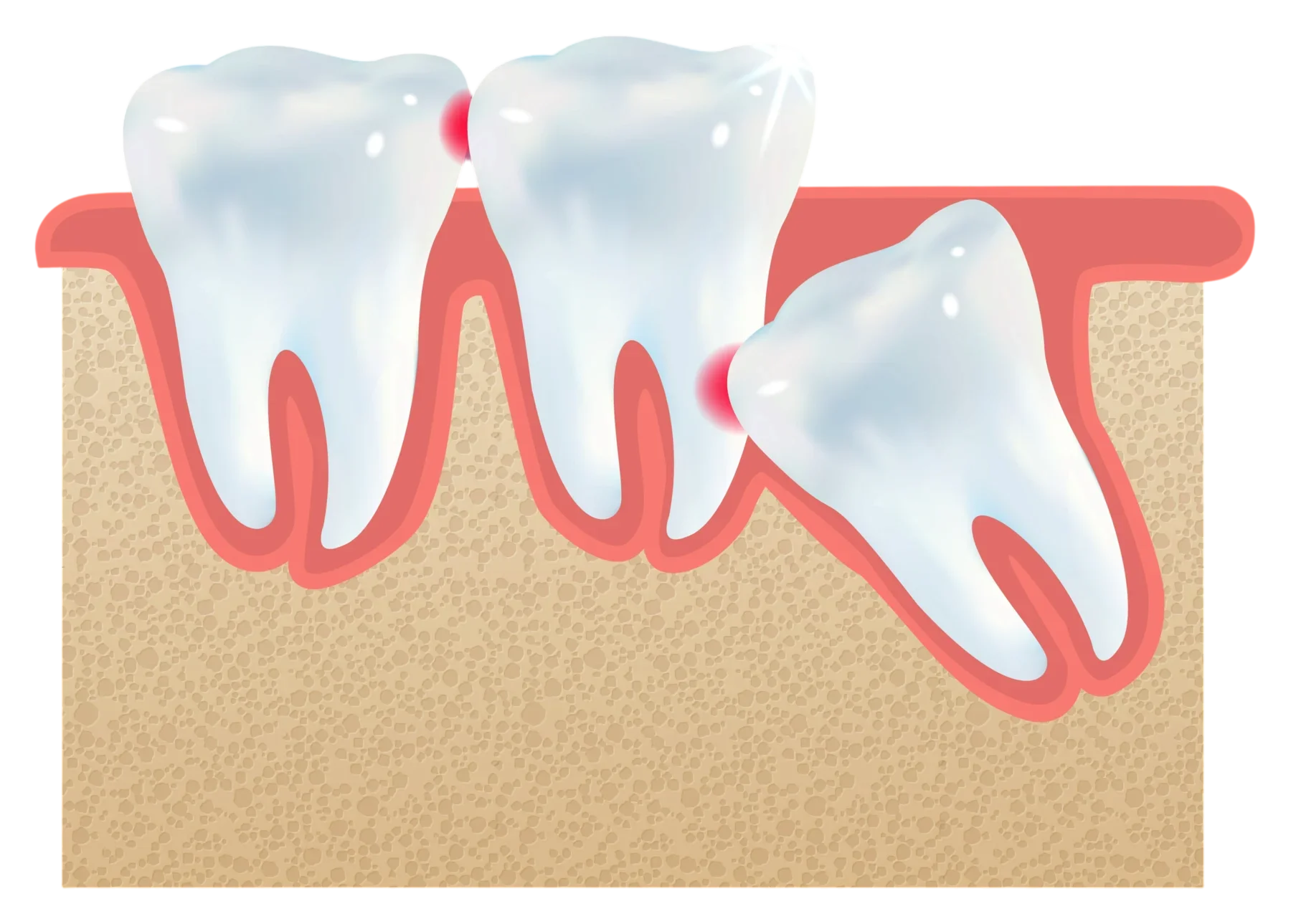 Tilted
A tilted wisdom tooth can trap food and bacteria or press against the second molar, sometimes leading to decay or gum problems.
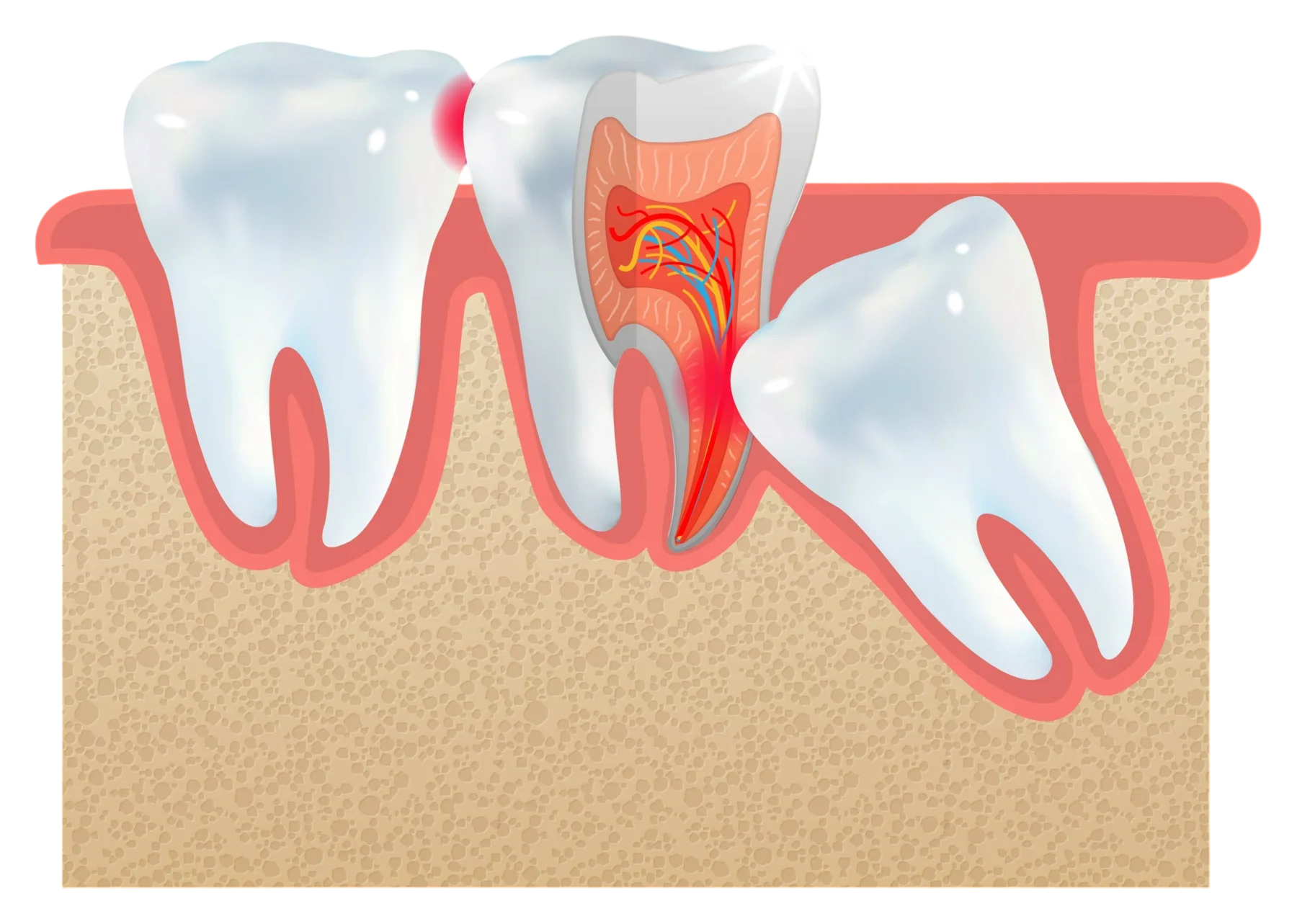 Decay Risk
When the back area is difficult to clean, cavities or gum irritation can develop around the wisdom tooth or the tooth beside it.
In this short office video, Dr. Guerra explains why room, position, symptoms, and age all matter when deciding whether wisdom teeth should be removed.
Wisdom teeth can be difficult to clean because they sit so far back. If there is not enough room, they may only partly come in, push against the second molars, trap food and bacteria, create gum swelling, or cause cheek biting and bite problems.
The doctor reviews symptoms, room in the mouth, medical history, medications, and the position of the wisdom teeth.
Radiographs help show root development, tooth angle, decay, bone position, and nearby anatomy.
The team explains whether local anesthesia is enough or whether sedation should be considered.
If sedation is used, a responsible adult must drive the patient to and from the appointment.
The office gives healing instructions and explains what symptoms are normal and when to call.
Wisdom teeth are usually removed because many patients do not have enough room for them. If they are crowded, stuck, decayed, or hard to clean, removal may prevent bigger problems.
Wisdom teeth are often evaluated in the late teens through the mid-20s, when the roots and tooth position can be reviewed. Wisdom teeth can still be removed at other ages if they are bothersome or decayed.
If no sedation is used, some patients can drive themselves. If sedation is required, the patient must be driven to the office and home afterward.
Not always. Some patients remove one tooth, one side, or all four at one appointment. The doctor will recommend a plan based on symptoms, position, risks, and the patient's health and comfort needs.
Bring your medication list, insurance information, and any recent X-rays if another office has them. If you do not have X-rays, the office can take them.